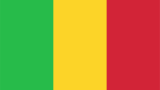
Mali is a landlocked country of western Africa, mostly in the Saharan and Sahelian regions. Mali is largely flat and arid. The Niger River flows through its interior, functioning as the main trading and transport artery in the country. Sections of the river flood periodically, providing much-needed fertile agricultural soil along its banks as well as creating pasture for livestock.
Although Mali is one of the largest countries in Africa, it has a relatively small population, which is largely centred along the Niger River. The Bambara (Bamana) ethnic group and language predominate, with several other groups—including the Fulani (Fulbe), Dogon, and Tuareg—also present in the population. Agriculture is the dominant economic sector in the country, with cotton production, cattle and camel herding, and fishing among the major activities.
The fabled but now faded trading and learning centre of Timbuktu is situated in Mali on the upper Niger River. For centuries, caravans crossed the Sahara desert from North Africa while others came from the forest regions to the south, meeting at the crossroads of Timbuktu. Other notable towns include Djenné, noted for its famous mosque and other examples of Sudanese architecture, and Mopti, a bustling market centre. The Dogon region, centred on the Bandiagara escarpment in the country’s central area, is an important tourist destination because of its unique cliffside villages and diverse artistic life. The national capital, Bamako, is located on the Niger River and is a rapidly growing city because of increased migration from the depressed rural areas.
Mali
22,106,000
Islam
497,000, about 2.2%
Before modern-day Mali came into existence, there were several kingdoms and empires that flourished in the territory that covers part of Mali today. After the short-lived Wassoulou Empire, France established a colony called French Sudan in 1892. French colonial administration came to an end in 1960 and Mali became independent. After experimenting with one-party rule and military rule for decades, Mali adopted a new constitution in 1992 and made a successful transition to democratic rule. Before the coup that overthrew the democratically elected Malian government in March 2012, the country was considered exemplary among African countries for protecting civil liberties and political rights. The media, in particular, was vibrant and open and not subject to governmental pressure or restrictions. For instance, during the presidential election of 2007, the results were considered valid and there was little or no electoral violence. 70 parties ran in the election and the right to vote was extended to all citizens of Mali.
However, in 2012 Tuareg rebels (who had been active in northern Mali for a number of years) formed an alliance with radical Islamic groups, including some foreign fighters mainly coming from Algeria. They overran government forces and took control of several cities and a sizable portion of northern Mali. Consequently, a military coup ousted the civilian administration, but civilian administration was restored after the presidential election in 2013 was won by Ibrahim Boubacar Keïta, a veteran politician and a former prime minister. The Malian government was able to push back the advance of the rebels and reclaim most of the occupied territory with the help of French troops. Despite the persistence of occasional clashes between rebels and government forces, a ceasefire was concluded in 2013 between the rebels and the government (The Guardian, 19 June 2013).
Despite the UN sending in a 12,000 strong peacekeeping force (called the Multidimensional Integrated Stabilization Mission in Mali), the central government has still not managed to regain control and assert its authority over a significant portion of Malian territory. In addition to this political problem, the country faces several economic challenges related to the high poverty level. Most people live in remote parts of the country which face various environmental problems like rapid desertification and lack of access to water.
In July/August 2018, the country conducted a successful presidential election in which President Keïta managed to win a second term. Despite allegations of fraud from the opposition, this was seen as a positive development (Al-Jazeera, 5 August 2018). However, in June and July 2020, the president faced opposition from protesters who demanded his resignation. On 18 August 2020, President Keïta was ousted by a group of soldiers calling itself the National Committee for the Salvation of the People (BBC News, 19 August 2020). The UN, African Union and regional leaders all condemned the coup, but the coup leaders claimed to have saved the country from sliding into chaos and confirmed they would prepare elections within a reasonable time-frame. In May 2021, the 2020 coup leader, Colonel Assimi Goïta, seized power, thus upending any transition progress achieved (The Guardian, 25 May 2021). In May 2022, the Mali junta claimed that Western-backed military officers had attempted a military coup to oust it from power (Reuters, 17 May 2022). See details below in: Political and legal landscape.
In June 2023 a constitutional referendum took place in which citizens agreed to give the head of state increased power over parliament and the country (Al-Jazeera, 23 June 2023). See further details below in: Political and legal landscape.
The present area called Mali was dominated by various Muslim empires and kingdoms before the French colonization. Especially the northern part of the country was predominantly Muslim and there were some followers of traditional African religion in parts of the southern areas. It was the White Fathers, a Roman Catholic missionary order, who brought Christianity to Mali in 1895. However, the growth of Christianity in Mali was very slow. Most of today's Christians are descendants of former Muslims and Animists who converted to Christianity during the colonial period. It was only in 1936 that the first African Roman Catholic priest was ordained, and it was only in 1962 that the first Malian bishop was consecrated. Protestants came to the country in 1919 via the Gospel Missionary Union (GMU) from the USA. That was followed by the arrival of the Christian and Missionary Alliance in 1923.Mali has been dominated by Islam for centuries (in a mostly moderate form) and by a constitutionally secular political system which prohibits religious political parties. Apart from the northern part of the country where the Christian minority had always faced discrimination at the hands of the Muslim majority, Christians used to enjoy a fair amount of freedom in Malian society, which also allowed the presence of foreign Christian missionaries. Malian Muslims had a reputation for being moderate and tolerant of other religious beliefs. There was also a high tolerance level towards converts to Christianity during the colonial period. This tolerance, however, faded as time went by and it is now highly dangerous to be known as a Christian of Muslim origin. Both Malian Christians (the majority being Roman Catholic) and Muslims tend to combine their faith with indigenous animist beliefs, since there is a significant presence of Ethno-religionists or Animists in the country. Even though most Malian Christians live in the south of the country, they have come under increasing pressure as a result of the threat from radical Islamic activities in the north.
An estimated 89.0% of the population are Muslim according to WCD 2023 data and most are adherents of Malikite Sunni Islam which is a version of Islam influenced by Sufism. This brand of Islam is moderate and tolerant of other faiths. In northern Mali, especially among the Arab and Tuareg tribes, the influence of more radical versions of Islam has grown over the past few years. These more radical versions have little respect for Sufi-influenced religious practices, as evidenced by the destruction of 13th century Sufi shrines in Timbuktu when radical Islamic groups controlled the city in 2012.
The situation in Mali changed abruptly in April 2012 when the creation of the independent state of Azawad in northern Mali was proclaimed. The radical Islamic rebels, most of whom can be identified as Wahhabis, soon established an Islamic state system with a strict Sharia regime in the north. Most Christians fled before the radical Islamic take-over. In the meantime, Islamic militants destroyed churches and other public Christian properties.
The Church in southern Mali has also been negatively affected by the increasing visibility of various Wahhabi groups. Although the rebels and the government reached a peace agreement in 2015 and international peacekeepers were brought in, Islamic radicalization in Malian society has continued and this has affected the whole region.
In an increasingly chaotic environment marred by complex security challenges, the lives of Christians in Mali have become almost unbearable. The landscape is plagued not only by jihadist groups but also by traffickers and organized crime syndicates, all of which operate with increasing impunity due to the disintegration of the country's institutions. The devastation that began in 2012 when radical Islamic groups seized control of the northern regions continues to have a lingering impact. Churches were razed, and Christians were displaced, leaving them homeless and their places of worship in ruins. Although some have ventured back to their communities under the cover of police protection, the looming threat from jihadists has not receded. Rather, it has metastasized further south, intensifying the dangers faced by Christian congregations. Evangelical missionary work in the north is particularly vulnerable to violent attack and abduction by radical Islamic groups, as are Christians who have converted from Islam. Family and community pressures compound the difficulties faced by converts, making them targets for violence and social ostracization. Additionally, the volatile security situation has rendered the region increasingly inhospitable for NGOs.
- Church leaders in areas under Islamic extremist control are closely monitored and face tight restrictions on movement, esp. in remote areas. As leaders seek ways to continue ministry, pray for godly wisdom and courage. Pray that they would experience his nearness. As the safety and wellbeing of their families are always on their minds, pray for Gods peace that surpasses human understanding
- Targeted attacks on Christian homes and businesses are effective in impoverishing families, leaving both men and boys at risk of being recruitement by jihadist groups and forceful convertion to Islam. The loss of Christian men and boys weakens families financially and injures the health of the wider church. Pray that the plans of the adversary will be thwarted, and that God will continue to build and strengthen His church and His children.
- Mali is a Semi-presidential republic led by Transition President Assimi Goita since May 2021. It is a challenged government, struggling to contain the jihadist threat. Its rule has been characterised by an erosion of democracy and civil liberties. In June 2023 a referendum on a new draft constitution was held. The government promised a return to constitutional, civilian rule. Pray for a complete return to democracy and that government will rule with justice. Pray for success in taking back control over vast regions Islamic radicals have taken and that peae will be restored with transparency and accountability.
- Mali has once been a beacon of relative tolerance, but under the jihadist threat communities have become less trusting of each other. Pray for Christians to be able to retain their footing and good relationship with their neighbours or work hard to restore it where it has broken down.
- Church-run schools have had to shut down, further exacerbating the communitys sense of siege. Pray for the Lords encouragement and spiritual strength to know that they are not abandoned by God or the wider Body of Christ. Pray for opportunities for them to enjoy fellowship and care from the wider Christian community (locally and globally).
- Pray for the Lord to reveal Himself to perpetrators of violence and that many may come to salvation in Christ.
- Christians form a small minority in Mali less than 3%, but they have been active in advocacy and in seeking every opportunity to engage their government. Thank the Lord for the courageous Church in Mali
- Thank the Lord for every pastor who have equipped and faithfully discipled the Church. Pastors asked us to pray for fruit on their work that the Church may experience a spiritual awakening
- Mali is in 14th on the 2025 World Watch List. Islamic oppression is the most prominent form of persecution Christians face. Pray for wisdom and courage to navigate changing circumstances.
- Christian women and girls face increasong risk of kidnapping and forced marriage to militants. Pray for captives to be released. Until then, may they experience the Lords daily provision in miraculous ways. May they experience His nearness in their trouble. Pray that released survivors may receive sufficient emotional and physical care. Pray for families awaiting the return of loved ones.
References: