
Niger is a western African landlocked country, bordered on the northwest by Algeria, on the northeast by Libya, on the east by Chad, on the south by Nigeria and Benin, and on the west by Burkina Faso and Mali. The capital is Niamey. The country takes its name from the Niger River, which flows through the southwestern part of its territory. The name Niger derives in turn from the phrase gher n-gheren, meaning “river among rivers” in the Tamashek language. Niger extends for about 750 miles (1,200 km) from north to south and about 930 miles (1,460 km) from east to west. It tends to monotony in its features, is intersected by numerous depressions, and is dominated by arid highlands in the north. Rainfall increases as one proceeds southward so that the country divides naturally into three distinct zones—a desert zone in the north; an intermediate zone, where nomadic pastoralists raise cattle, in the centre; and a cultivated zone in the south. It is in this southern zone that the greater part of the population, both nomadic and settled, is concentrated. The capital is Niamey.
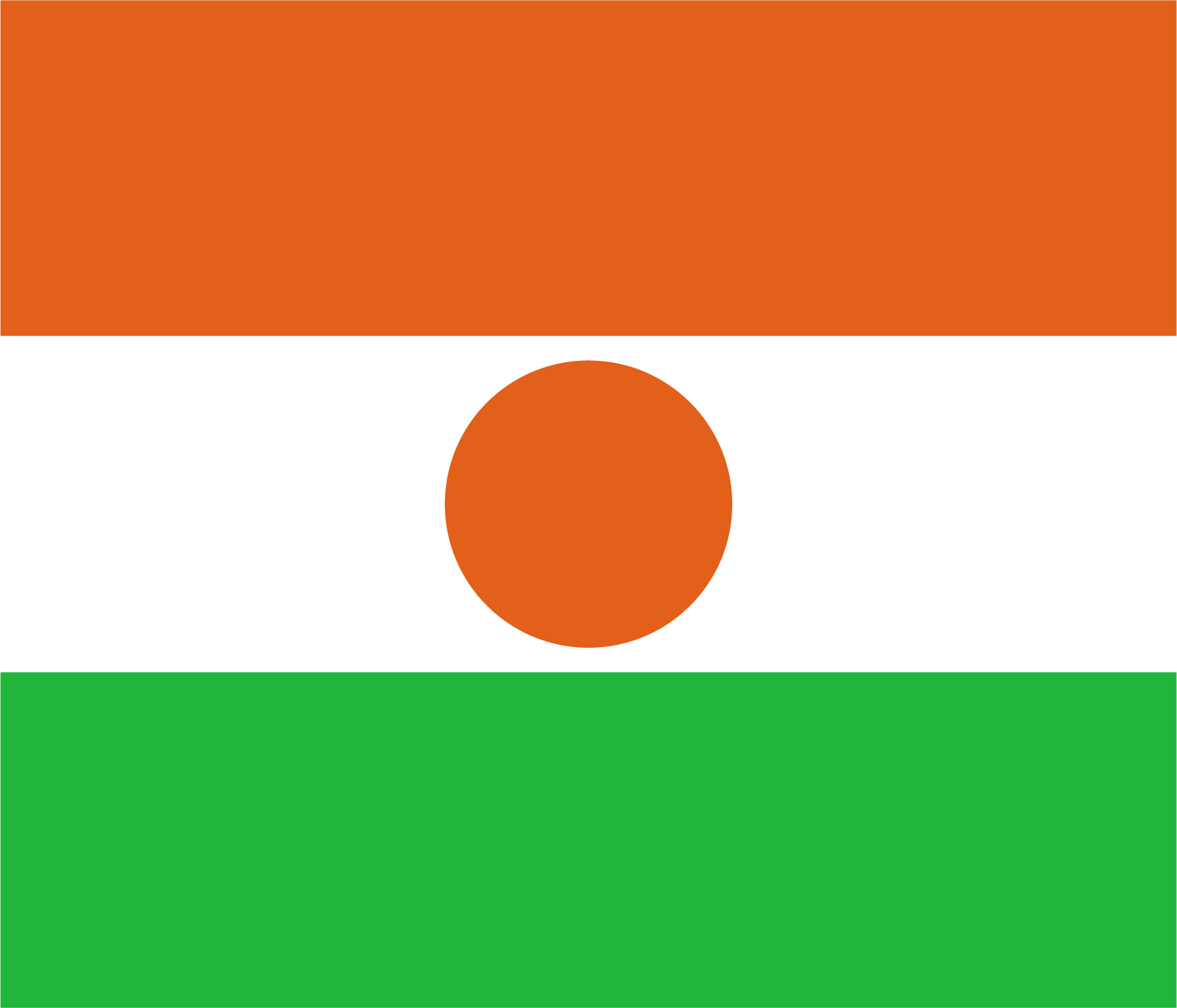
Niger
27,066,000
Islam
66,600 or 0.2%
Niger declared independence from France in 1960. Since then, the country has seen at least four military coups. Despite the improvements since Mahamadou Issoufou came to power in 2011, there have been concerns about the 'securitization' of Niger’s foreign policy and domestic politics. The country is battling against various Islamic militant groups: Al-Qaeda in the Islamic Maghreb (AQIM) and Movement for Unity and Jihad in West Africa (MUJWA) on its northern western border with Mali, and ISWAP and Boko Haram on its southern border with Nigeria. Niger's democratic institutions, compared to its neighbours Burkina Faso and Mali, have shown some level of resilience and efficiency.
Niger is a Muslim majority nation. An estimated 96.1% of the country's population follows Islam. Most Muslims in Niger are members of either the Tijaniya or Qadiriya Sufi orders, although radical Islamic elements seek to disassociate the population from Sufism and encourage Salafism. Additionally, there are smaller Islamic groups in Niger, including the Kalikato, who have a belief system like Boko Haram in rejecting all influences from the West. Indeed, the influence of Boko Haram seems to be spreading from northern Nigeria into Niger.
The propagation of more radical Islamic ideologies in Niger is advancing in tandem with the rise of aggressive jihadism, signifying a deeply concerning trend. Not only are these ideologies driving violent actions, but they are also being spread through non-violent means. Such methods include the use of religious institutions like madrassas and other platforms for indoctrination, thereby amplifying their reach and impact across various levels of society.
Despite the government's attempts to control what is taught in the many madrassas in the country, there is concern that these could be playing a role in the radicalization of the youth. Any such radicalization is likely to make life more difficult for Christians in the country, especially as the whole Sahel region is already under serious jihadist threat.
According to the US State Department (IRFR 2022 Niger):
"There are several hundred Baha’i, who reside primarily in Niamey and in communities west of the Niger River."
"A small percentage of the population adheres primarily to Indigenous religious beliefs. Some Muslims intermingle animist practices with their practice of Islam, although observers note this has become less common over the past decade due to the influence of countries such as Saudi Arabia, Iran, Turkey, and Kuwait."
"The government prohibits open air, public proselytization events by all religious groups due to national security concerns. There is no legal restriction on private, peaceful proselytization or conversion of an individual from one religious faith to another as long as the group sponsoring the conversion is registered with the government."
Although there were missionary expeditions along the Niger River in the 19th century, Christianity did not become established in the country until the 20th century. The Sudan Interior Mission started working in Niger in 1923 and the Evangelical Baptist Mission in 1929. The Roman Catholic Church came to Niger in 1931 from its main mission base in Dahomey (now Benin) and has since set up two dioceses. (Source: Dike K O: Origins of the Niger Mission 1841-1891, Anglican History, 1962)
The areas outside the main cities, especially outside the capital city, are the main areas where Christians experience persecution. Taking advantage of the COVID-19 crisis, Islamic militants were able to expand their areas of influence, which has put more Christians under pressure, particularly in the western areas of the country.
- Niger has suffered from extended droughts, causing much hardship for farming (constituting the largest sector of the economy). Labelled as one of the poorest countries on earth, her people have had to show great resilience. Thank the Lord for this remarkable country and people. Pray that He will bless Niger in all aspects.
- Niger is 28th on Open Doors 2025 World Watch List, with Islamic oppression the strongest type of persecution. There has been a surge in jihadist attacks, especially in the west and south-east. There the situation for Christians is dire. Communal worship and meetings are dangerous, and must happen in secret. Pray for protection for believers who chose to stay and that they may have wisdom in navigating these dangers. Those who have been displaced are experienced different challenges, among which great discouragement. Pray for comfort and peace of mind.
- In the West there has been a rise in attacks on Christian properties, incl. churches, schools and health care centers. Please pray for communities affected by these realities to be freed from the militants and that these destroyed services will be restored soon.
- Christians face uncertainty over the space they will enjoy in society in the future. Pray that they will remain clear witnesses for Christ and that the Lord will continue to build His Church that will remain salt and light live in these changing circumstances
- Pray that the Lord will raise up shepherds for these believers. Pray that believers from affected areas, may experience support and fellowship, whether they have stayed or fled.
- Christian men are often specific targets of violence to instil fear. Pray for Gods comfort and for the grace to remain firm in the faith. Pray for courage to live out their faith and that they will find a way to encourage and minister to each other.
- Women and girls in Niger are particularly vulnerable to abduction, rape and sexual abuse by extremist groups here too. Pray that the church will be a place of safety and healing for our sister who may have experienced such targeting. Pray for sufficient physical and emotion care for survivors.
- Christian boys are targeted for killing or forced recruitment into labour or trafficking between militants in exchange for money, weapons, or other resources. Pray for Gods intervention and that captives will be freed.
- Niger suffered a coup in Jul 2023, by Gen. Abdourahmane Tchiani. Pray for full return to democracy with transparency and accountability. Some fear that the coup would worsen security in areas controlled by militants. Pray for wisdom for the government and for success in protecting citizens.
- Since the coup Niger are at odds with the rest of the West African (WA) Community. Pray for a restoration of peace and that the WA community will work together to curb growing instability caused by Islamic radicals.
References:

