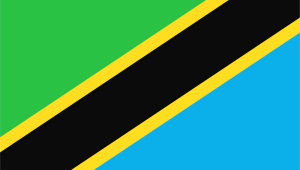
With a population of just over 72 million, Tanzania is one of the most populous African countries located entirely south of the equator. The East African country shares a border with eight others: Kenya and Uganda to the north; Rwanda, Burundi, Democratic Republic of the Congo to the west, and Zambia, Malawi, and Mozambique to the south. The eastern border of Tanzania meets the Indian Ocean. A popular destination, Tanzanian highlights include the island of Zanzibar, Serengeti National Park, the Ngorongoro Conservation Area, Tarangire National Park, Lake Manyara National Park, and Mount Kilimanjaro. For all its beauty and its appeal however, life in Tanzania is becoming increasingly challenging for Christians. Here are some insights into religious life and persecution in the country.
Tanzania is a majority Christian nation, with an estimated Christian population of 55.8%. However, the religious demography is very different when comparing mainland Tanzania with the island Zanzibar. While most of the mainland population is Christian (with a Muslim population concentrated in the coastal region), the vast majority of residents of Zanzibar are adherents of Islam. This Muslim majority archipelago has become a region with significant challenges for the Christian population over the last few years. For example, Christians have not received equal access to justice due to the bias against Christians in court and Christians have been punished for cooking during daylight hours of the month of Ramadan.
Christian communities in Tanzania are experiencing persecution to some degree; however, Christians with a Muslim background on Zanzibar are affected the most severely. Bullying, harassment and sometimes physical attacks have been observed in the country. The conservative Islamic presence has influenced policymakers to adopt policies that impact Christians directly or indirectly at the local and national level.
Kiswahili is the first language for many people in Tanzania, especially in the coastal regions of Tanga, Pwani, Dar es Salaam, Mtwara and Lindi. In the inner regions of Tanzania, Swahili is spoken with an accent influenced by other local languages and dialects. There, it is a first language for most of the people who are born in the cities, while being spoken as a second language in rural areas.
Security challenges in the country have been domestic and transnational. One of the most significant developments has been the diminishing influence of the radical Islamic group UAMSHO, which previously used Zanzibar as a launchpad for its activities. However, the decline of UAMSHO has been offset by the emergence of new threats. Particularly alarming is the increased presence of Al-Shabaab cells within the country. Known for its extremist views and violent actions, Al-Shabaab’s presence has raised alarm bells within security circles. The group’s known capability for complex attacks in countries like Somalia and Kenya puts Tanzania in a precarious position, given its relatively porous borders.
For converts from Islam to Christianity, family-based persecution is often the first and most painful form of discrimination they experience. Families have been known to sever ties or even inflict punishment on family members who convert, adding a layer of personal agony to the societal prejudice they already face.
Female converts to Christianity face the most intense persecution. They continue to face the prospect of forced marriage, forced divorce, expulsion from their homes and isolation from their families, denial of their inheritance and custody rights. Young female converts in particular are likely to be confined at home with severe restraints on their movement.
In Zanzibar, Christians have historically struggled to hold meetings safely due to fears of attack. This lingering apprehension is rooted in the experience of past incidents. Churches and Christian gatherings are often closely monitored by community members and youth.
Christians in certain regions have encountered significant faith-related barriers in operating their businesses. Discrimination against them can emerge from both governmental and private sectors, affecting crucial aspects of business operation. Christians find it more difficult to access loans, subsidies, and government contracts, as these processes can be influenced by religious biases. Additionally, they face client boycotts, where customers choose not to patronize their businesses solely based on the owners’ religious affiliation. These challenges are not just isolated incidents but part of a broader systemic issue.
The security sector is affected by fundamental internal divisions. The Tanzanian Police Force is the country’s largest security unit with 45,000 personnel and is responsible for domestic security. It includes the Field Force Unit, responsible for crowd control and riots, the Criminal Investigation Department, which handles serious crimes and investigations, and the Special Anti-Robbery and Anti-Narcotics Unit, which focuses on organized crime. They are supported by the Tanzanian Intelligence and Security Service. As constraints on Tanzania’s executive have weakened since 2015, these services have become increasingly politicised, according to the Africa Centre for Strategic Studies (ACSS). The 23,000-strong Tanzania People’s Defence Force (TPDF) is largely focused on external threats. The TPDF has a long-established reputation for professionalism, competence, and restraint.
Close to 200 000 refugees and asylum seekers are in Tanzania. According to the United Nations Refugee Agency, they are primarily from Burundi and the Democratic Republic of the Congo. They mostly live in two camps, while some refugees live in villages and three old settlements in Kigoma, Katavi, and Tabora regions.